Why Automatic Website Translation is Essential Today
In the past, localizing a website was a months-long project. Today, markets demand agility. If you upload a new product to your Shopify store today, it should ideally be available in French, Spanish, and English by tomorrow.
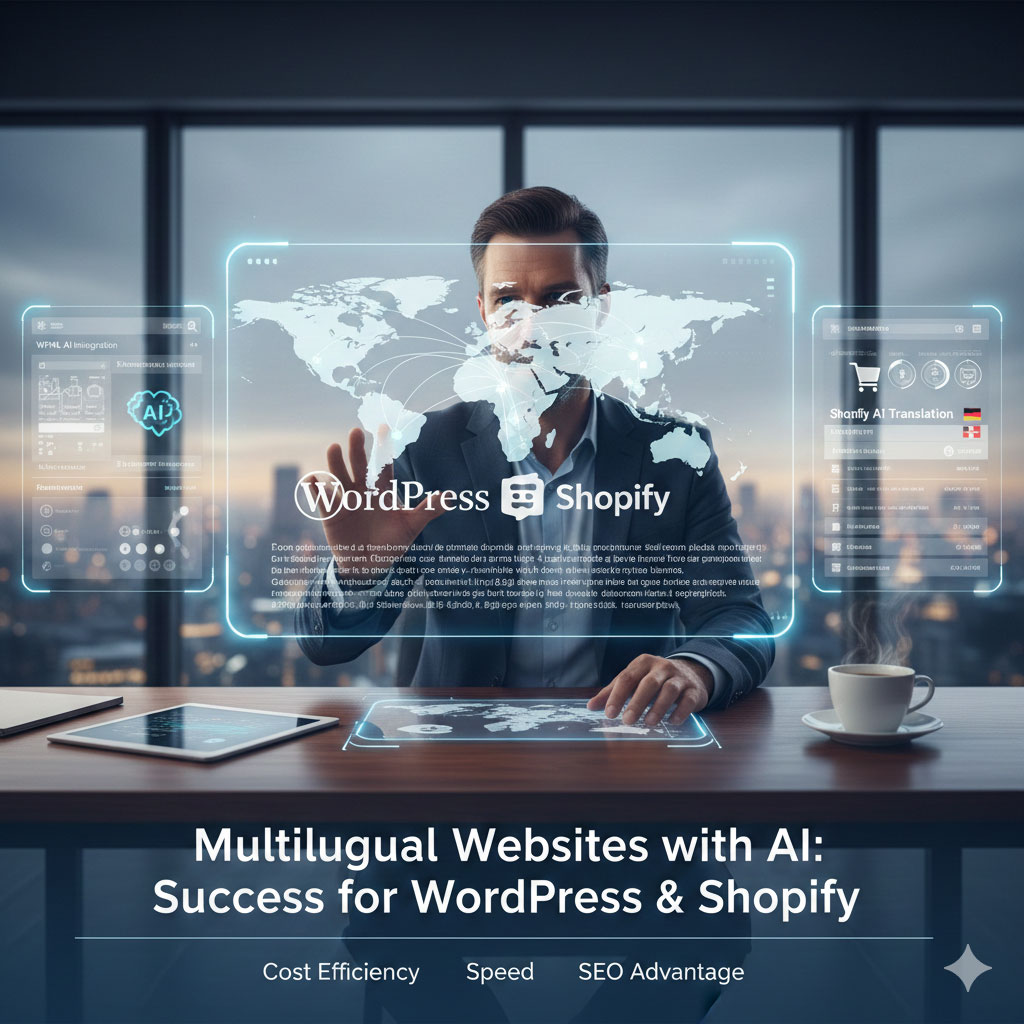
- Cost Efficiency: Save up to 90% of costs compared to traditional translation agencies.
- Speed: Go-to-market in days instead of months.
- SEO Advantage: Through automatic website translation, you cover long-tail keywords in various languages that your competitors are likely ignoring.
This isn’t just about word-for-word conversion. Modern AI models understand the context and the specific tone of your brand.
WordPress AI Translation: Optimizing WPML, Elementor, and More
WordPress is the backbone of the internet, and the requirements for multilingualism are high. Especially users of page builders like Elementor translation often face technical challenges.
WPML AI and DeepL Integration
The most well-known tool in the WordPress ecosystem is WPML. With WPML AI integration, you can have content translated directly within the backend. But beware: mere translation is not enough for SEO. You must ensure that metadata, image alt-texts, and slugs (URLs) are also correctly localized.
The Challenge of Elementor & Divi
With Elementor translation, texts are often stored in complex widgets. A professional solution recognizes these structures automatically. If you need support with technical implementation, take a look at our automated SEO translation services, which are specifically designed for complex CMS structures.
Shopify AI Translation: Scaling for E-Commerce
In e-commerce, trust is the hardest currency. A poorly translated checkout process leads immediately to cart abandonment. Therefore, Shopify AI translation must master precise technical data (dimensions, weights) and marketing claims perfectly.
Shopify offers native apps like “Translate & Adapt,” but these quickly reach their limits for large catalogs. This is where external workflows come into play, processing massive amounts of product data via CSV export and AI editing.
Pro Tip: Ensure that your AI translation doesn’t just translate the “handles” (the product URLs), but keeps them SEO-optimized or localizes them meaningfully.
Best Practices for Multilingual SEO Websites
To ensure your international website is actually found, you should consider the following points:
- Correct Hreflang Tags: Show Google which language version is intended for which country.
- Keyword Research per Country: A keyword in one language cannot always be translated 1:1. Use AI to find local synonyms.
- Cultural Adaptation: Currencies, date formats, and units of measurement must be accurate.
For in-depth advice on your international strategy, you can reach us anytime via our contact page.
Who Handles the Translation and What Does it Cost?
Costs depend heavily on the volume and the desired quality. While simple plugins often charge monthly fees, professional service providers rely on a combination of AI efficiency and human expertise (Post-Editing).
At SEO Translation Pro, we offer solutions that are significantly more affordable than traditional agencies but bring the SEO power of a specialized firm. Learn more about our philosophy in our Legal Notice and Company Profile.
Conclusion: The Future is Multilingual and AI-Powered
The technology is ready: Translating multilingual websites with AI is no longer a risk, but a competitive advantage. Whether you use WordPress with WPML or run a Shopify store – automation saves you time, money, and stress. The key to success lies in the combination of smart technology and SEO know-how.
Ready for the Global Market?
Don’t let your website fail at the language barrier any longer. We help you translate your WordPress or Shopify presence into an SEO-compliant international success using state-of-the-art AI technology.
Request a free consultation now and start growing internationally!